Research & Innovation
Exploring the Science Behind the Hive. Discovering New Possibilities.
At Jo's House, our fascination with honeybees goes far beyond honey production. Every honeybee colony is a remarkable living environment filled with activity, communication, natural aromas, vibration, warmth, and complex biological processes.
Through our Bee Bed Experience and working apiaries at Grit & Grace Homestead, we have a unique opportunity to observe these environments and explore questions about honeybee biology, colony behavior, hive air, and human experiences.
Our goal is to bring together beekeepers, researchers, healthcare professionals, educators, and technology partners to investigate these subjects responsibly, document what we learn, and contribute useful knowledge to both the scientific and beekeeping communities.
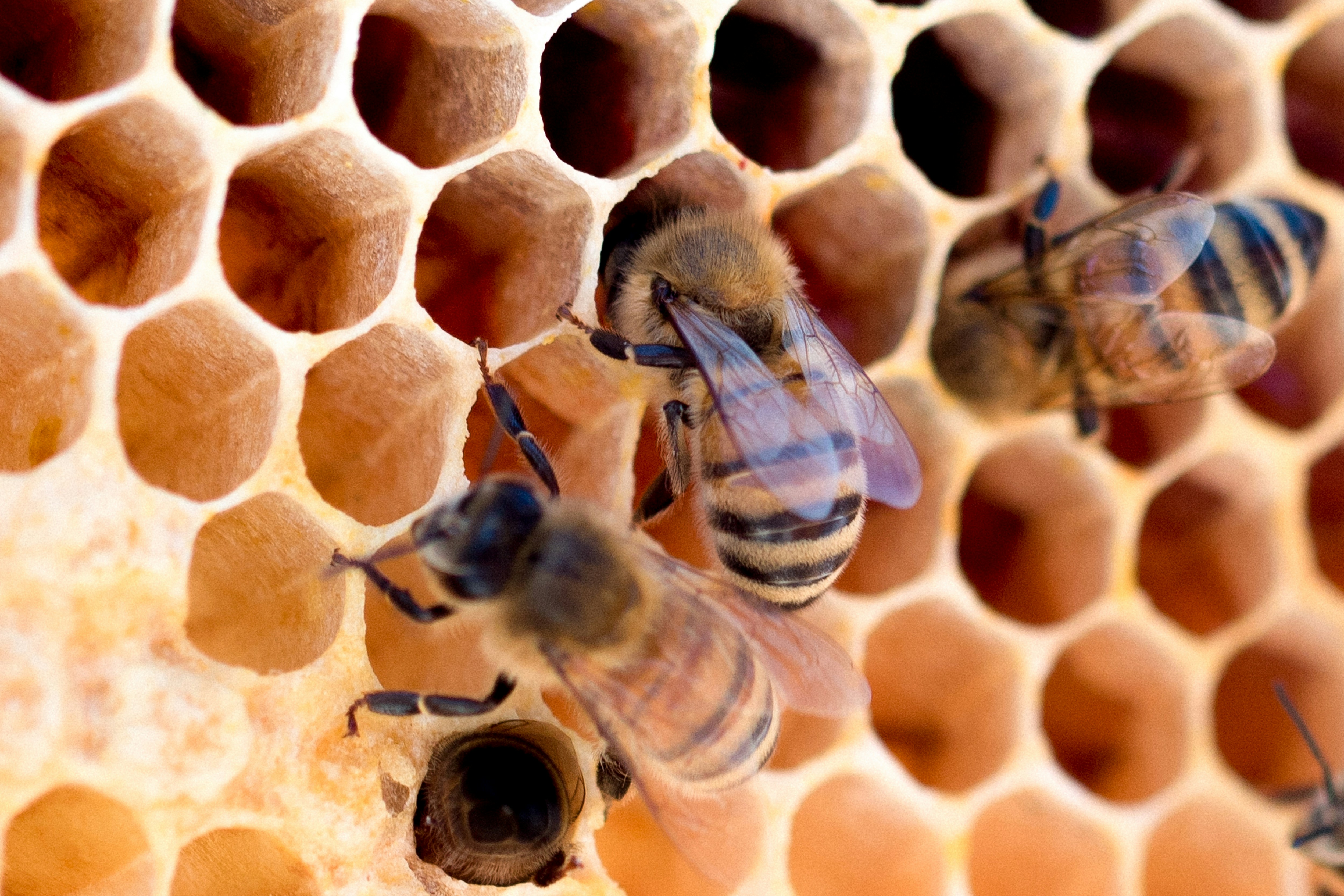
Asking Questions. Seeking Answers. Sharing What We Learn.
The Bee Bed Experience at Jo's House began with a simple idea: creating a peaceful place where people could rest in close proximity to active honeybee colonies.
As we developed our Bee Bed huts and began observing their unique environments, we became increasingly interested in the activity taking place inside the hives. The sounds, vibrations, movement of air, natural aromas, temperature, and behavior of the colonies raised questions that we believe deserve further investigation.
Could different colony conditions change the sound and vibration experienced by guests? How does hive air vary throughout the year? What role do propolis and other hive materials play in the chemical composition of the hive environment? How might visitors describe their experiences of rest, relaxation, and overall well-being? And how can researchers distinguish any effects of the honeybee environment from the benefits of simply resting in a quiet, peaceful setting?
These are questions we hope to explore through thoughtful research rather than assumptions. Our commitment is to pursue careful observation, measurable data, responsible research practices, and honest communication about what the evidence does and does not show.
Understanding the Remarkable Environment Inside a Honeybee Colony
The Natural Sound and Vibration of the Hive
An active honeybee colony produces a constantly changing environment of sound and vibration. Thousands of bees communicate, move, ventilate the hive, regulate temperature, care for brood, and process nectar throughout the day. At Jo's House, we are interested in better understanding how this activity influences the acoustic and vibrational environment surrounding our Bee Beds. Our proposed investigations include examining sound frequencies, vibration patterns, colony activity, seasonal changes, and differences between individual colonies. We also hope to explore whether these characteristics correspond with visitors' descriptions of their experiences.
Exploring the Air Within the Hive
The air inside an active honeybee colony is influenced by the bees, hive materials, temperature, humidity, ventilation, nectar, wax, honey, and propolis. We are interested in understanding the characteristics of this environment and how its composition may change under different colony conditions. Our proposed work includes examining hive-air temperature, humidity, airflow, filtration, and potentially measurable volatile compounds associated with the hive environment. While beehive-air experiences have attracted interest in different parts of the world, important questions remain regarding exposure, safety, and possible effects on human well-being. Jo's House does not consider those questions settled. Our goal is to contribute careful observations and explore opportunities for properly designed scientific studies.
Understanding Propolis and the Natural Materials of the Hive
Propolis is a resinous substance collected and processed by honeybees and used within their colonies. Researchers have investigated the chemical composition and biological properties of propolis, but those findings do not automatically establish the safety or medical benefits of inhaling propolis vapor or hive air. At Jo's House, we are interested in learning more about the characteristics of propolis, the natural compounds present within beehive environments, and the equipment used to study or deliver those compounds. We believe understanding the science and safety of these substances is essential before drawing conclusions about potential human applications.
Exploring Rest, Relaxation & the Visitor Experience
One of our most important goals is to better understand how visitors experience the environment of the Bee Beds. Our guests rest in a quiet setting surrounded by the natural sounds, vibrations, warmth, and aromas associated with active honeybee colonies. We are interested in studying how participants describe their relaxation, perceived stress, comfort, and overall experience. Future research may explore measurements such as heart rate, heart-rate variability, blood pressure, self-reported stress, perceived relaxation, sleep quality, and other appropriate indicators. Any human-participant research will require appropriate protocols, informed consent, privacy protections, safety assessment, and applicable independent ethics review before enrollment. Our goal is to learn, document, and evaluate — not to promise medical results.
Healthy Colonies. Better Understanding. Responsible Beekeeping.
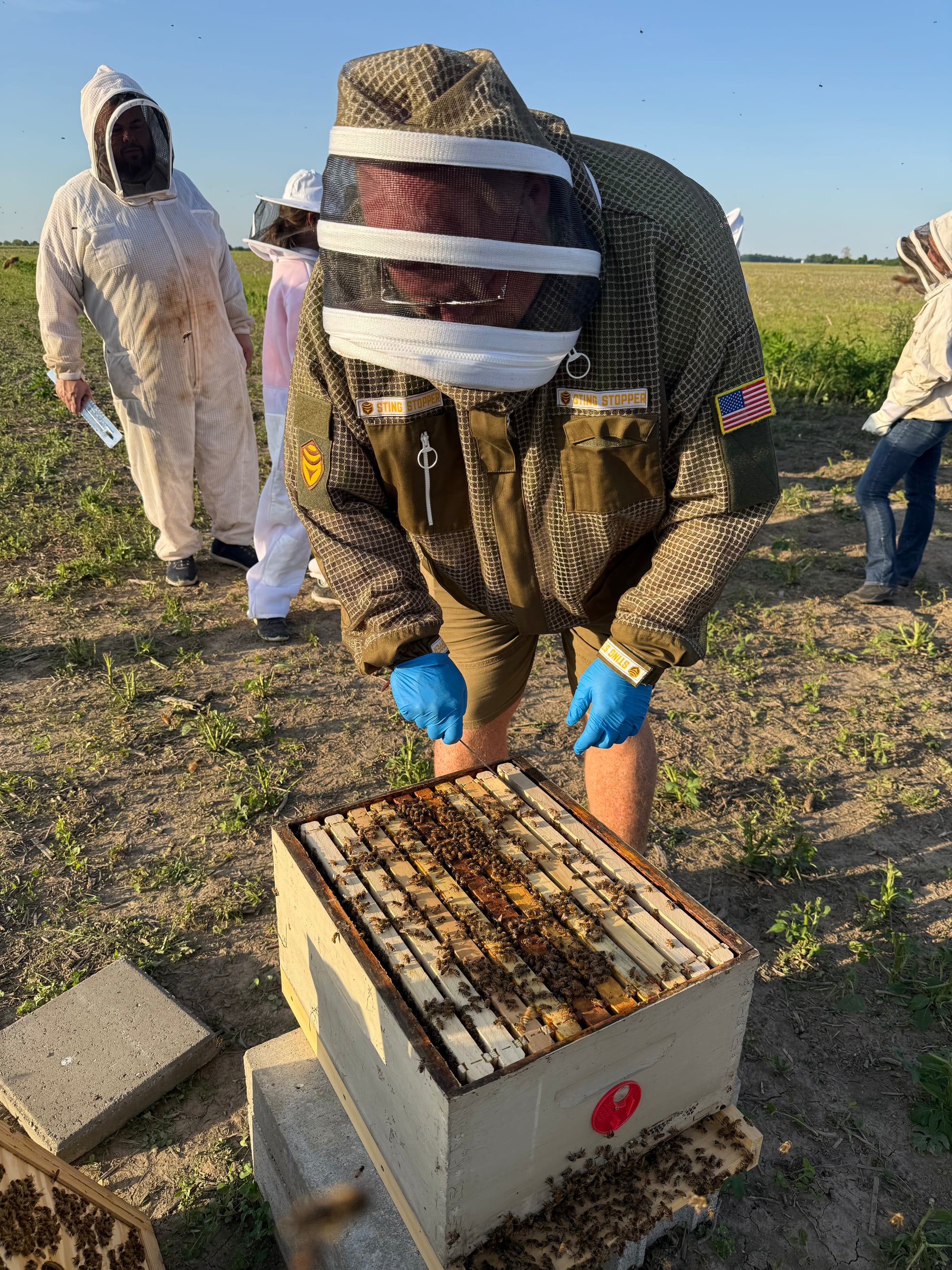
Our research interests also extend to the honeybees themselves. The health, genetics, behavior, and activity of individual colonies are important parts of understanding the overall hive environment. At Grit & Grace Homestead, our apiaries provide opportunities to observe differences between colonies, including brood production, nectar processing, honey production, ventilation activity, pest pressure, and colony development. During the 2026 season, we made field observations of Golden West honeybee colonies supplied through Olivarez Honey Bees. In our Bee Bed colonies, we observed particularly strong activity associated with ventilation, sound, vibration, brood development, and honey production. These were practical beekeeping observations rather than controlled scientific findings. However, these observations have encouraged us to pursue more systematic documentation of colony genetics, health, behavior, and environmental conditions.
A Unique Opportunity to Observe Living Honeybee Colonies
Jo's House operates its Bee Bed Experience at Grit & Grace Homestead in South Whitley, Indiana. Our Bee Bed facilities use horizontal Long Langstroth hive arrangements designed to allow guests to rest comfortably above enclosed, active honeybee colonies without direct contact with the bees during the experience.
The Bee Bed environment offers opportunities to observe sound, vibration, airflow, temperature, colony activity, and other measurable conditions. Our two Bee Bed huts were developed with multiple working colonies, providing an opportunity to compare different hive conditions and evaluate equipment within a real beekeeping environment.
Because we also maintain working apiaries beyond the Bee Beds, we have opportunities to study colony health and behavior within a broader agricultural setting. This combination of active colonies, visitor experiences, hands-on beekeeping, and equipment development creates a valuable setting for carefully designed observational and pilot research.
Developing the Tools to Investigate the Hive
Responsible research requires more than interesting observations. It requires dependable equipment, consistent measurements, suitable safety procedures, and methods that allow findings to be evaluated.
As we develop our research initiative, we are exploring specialized equipment for investigating hive air, environmental conditions, sound, vibration, and colony behavior. We are particularly interested in understanding how different approaches to hive-air sampling and delivery compare under controlled conditions.
Our planned evaluations include technology associated with the API AEROSOL II beehive-air system and PropoSteam propolis equipment developed by Medikoel. These tools may allow us to investigate equipment performance, environmental characteristics, and research methods as part of our broader initiative.
Their inclusion in our research plans should not be interpreted as evidence that inhaled hive air or propolis vapor provides established medical benefits. Safety, appropriate use, and independent scientific evaluation remain essential priorities.
Photographs of research equipment will be added here as they become available. We do not use medical-treatment imagery or imply that Jo's House provides clinical inhalation services.
Companies Supporting Our Work
Industry Support, Innovation & Collaboration
Meaningful progress often begins with people and organizations who are willing to support new ideas. We are grateful for companies that have contributed to our beekeeping, educational, equipment-development, and emerging research efforts. We recognize that supporting a nonprofit's programs or equipment needs is not necessarily the same as sponsoring a formal scientific study.
Medikoel
Research Equipment & Technology Collaboration
We are grateful to Medikoel for its willingness to collaborate with Jo's House as we develop our research involving beehive air, propolis, and the unique environment of active honeybee colonies. Our cooperation includes plans to evaluate equipment such as the API AEROSOL II and PropoSteam systems and investigate their potential use in carefully designed research. This collaboration represents an important opportunity to explore emerging technology while developing responsible methods for collecting observations and evaluating equipment.
Olivarez Honey Bees (OHB)
Honeybee Genetics, Colony Development & Educational Support
We are grateful to Olivarez Honey Bees, also known as OHB, for supporting Jo's House and our beekeeping education efforts. Their Golden West honeybee colonies have provided opportunities for practical observation of colony behavior, brood development, honey production, hive ventilation, and colony management. OHB's support has also included honey and educational resources that contribute to our broader nonprofit mission. As we expand our apiaries and educational programs, we look forward to continuing to learn more about honeybee genetics, colony health, and responsible management practices.
ApiVera / Terra Vera
Honeybee Health & Apiary Support
We are grateful for the support and resources associated with ApiVera and Terra Vera as we continue strengthening our honeybee management practices. Honeybee health is an essential part of our mission because healthy colonies are necessary for responsible beekeeping, educational experiences, and meaningful environmental observations. Through access to hive-health products and related resources, we continue learning about practical approaches to colony care and management.
Additional Equipment & Research Relationships
As our initiatives continue to grow, we welcome conversations with companies working in honeybee health, hive monitoring, environmental sensors, beekeeping equipment, agricultural technology, and research instrumentation. We believe collaboration between working beekeepers, manufacturers, researchers, and educators can help identify meaningful questions, improve equipment, and encourage responsible innovation.
Integrity in Every Observation. Responsibility in Every Study.
At Jo's House, we understand that curiosity and personal experiences are only the beginning of scientific investigation. We are committed to pursuing research with care, integrity, transparency, and a willingness to follow the evidence wherever it leads.
We also recognize that research may show that certain ideas are unsupported or require further study. That is a valuable part of the scientific process.
Building the Foundation for Future Discovery
Our research initiative is currently in the development and preparation stage. We are assembling the relationships, equipment, expertise, and procedures needed to investigate the hive environment more systematically.
Our work includes developing research questions, documenting practical beekeeping observations, exploring equipment capabilities, and pursuing opportunities for professional and academic collaboration. Formal studies involving human participants have not yet been presented as completed research through Jo's House.
As protocols, partnerships, oversight, and funding develop, we hope to conduct carefully planned observational and pilot studies and eventually share meaningful findings with the broader community.
Building partnerships, developing protocols, evaluating equipment, and preparing for future studies.
A Future Built on Learning, Collaboration & Discovery
Our long-term vision reaches beyond our existing Bee Bed facilities. As Jo's House expands, we hope to create additional opportunities for research, practical education, and collaboration within our future Learning & Processing Center.
Our vision includes bringing together agricultural education, honeybee science, environmental observation, and practical research in a setting where students, beekeepers, educators, and qualified researchers can learn from one another.
We believe scientific curiosity and stewardship of God's creation can work together in meaningful ways. The knowledge gained through these efforts may help strengthen our own programs while contributing useful information to the broader beekeeping and research communities.
Help Us Explore What's Possible
Jo's House welcomes opportunities to connect with researchers, healthcare professionals, scientists, engineers, educators, beekeepers, and companies interested in responsible scientific investigation.
Whether you represent a research organization, technology manufacturer, agricultural business, or professional field, we would welcome the opportunity to explore how your expertise may contribute to our work. We believe meaningful collaboration can help turn thoughtful questions into responsible research.
Explore a Research PartnershipExplore a Research Partnership
Tell us about yourself and how you'd like to collaborate.
Support the Pursuit of Knowledge
Developing responsible research requires time, equipment, qualified expertise, and financial resources. From environmental sensors and sound-measurement equipment to research instrumentation, data collection, participant safety, and professional collaboration, there are many opportunities to help.
Support Research
Help fund research preparation, equipment, data collection, and appropriate professional oversight.
Donate Equipment
Contribute instruments, monitoring systems, technology, and other resources that may support responsible investigation.
Become a Research Partner
Share your expertise, equipment knowledge, or professional experience as we continue building our research initiative.
An Important Note About Our Research
Jo's House is a Christ-centered nonprofit offering educational, agricultural, and nonmedical experiences. Our research initiative is exploratory and under development. Topics being investigated do not represent established medical treatments or proven health benefits.
Research concerning beehive air, propolis, sound, vibration, and human well-being remains subject to scientific evaluation and applicable safety and ethical requirements. The Bee Bed Experience and other Jo's House activities are not substitutes for medical or mental-health care.
We do not claim that exposure to active honeybee colonies, hive air, propolis, or hive vibrations diagnoses, treats, prevents, or cures any medical condition. Any future human-participant research will be conducted only with appropriate protocols, approvals, and participant protections.
Curiosity Leads to Discovery.
At Jo's House, we believe there is always more to learn from the remarkable world God created. Every colony offers new questions. Every observation provides an opportunity to learn. And every responsible investigation brings us closer to understanding the incredible complexity of honeybees and the environments they create.
Our mission is rooted in Hope, Healing, and Purpose. Our pursuit of knowledge is guided by curiosity, integrity, and a commitment to serving others. We look forward to discovering what lies ahead.